


Dream Analysis Explained: Origins & Pioneers
Dreams are not what you see in sleep,
it is the thing which doesn’t let you sleep.
— A.P.J. Abdul Kalam
01. What is dream analysis?
Ever wake up from a dream that lingers long after you’ve opened your eyes? That’s where dream analysis comes into play. Simply put, dream analysis is the art and science of uncovering the hidden messages your unconscious mind is sending while you sleep. Every symbol, every twist and turn in your dream carries clues about your emotions, desires, and even decisions waiting to be made.
Dreams are today’s answers to tomorrow’s questions.—Edgar Cayce.
Think of your dreams as a secret diary your mind writes at night—packed with insights you might overlook amid the hustle and bustle of daily life. Whether you’re curious about what your unconscious is trying to tell you as an opportunity for self-knowledge, or looking for ways to harness your dreams for success and practical guidance in your choices about work, relationships, and personal growth, dream analysis offers a fascinating, practical, transformative, and deeply personal window into your inner world.
02. Who is the father of dream analysis?
When it comes to unlocking the mysteries of our dreams, one name towers above the rest: Sigmund Freud. Often hailed as the father of dream analysis, Freud opened the door to understanding what our subconscious is really trying to tell us while we sleep.
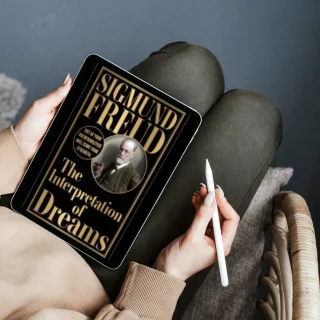
In his groundbreaking work, The Interpretation of Dreams (1900), Freud showed that the symbols, images, and stories that play out in our dreams are more than fleeting images—they’re clues to your inner world — dreams aren’t random.
Here’s the truly exciting part: Dream analysis is not just about decoding and interpretation—it’s about empowering transformation. Imagine turning your nightly adventures into actionable insights that brighten your waking life.
In his own words:
“The interpretation of dreams is the royal road to a knowledge of the unconscious activities of the mind.“
This article compares dream analysis across five prominent psychologists and physicists. First, we review their contributions in chronological order in “Timeline Notes.”
⚡ Timeline Notes
Freud was the undisputed pioneer of dream analysis (1900)
Jung worked in parallel with Freud and continued exploring dreams into the 1960s
Hillman came later, but is contemporary in terms of modern ideas about living, imaginal psyche
Lacan began working on dreams in the 1950s, though his most systematic texts appeared in the 1960s
The Jung–Pauli collaboration in the 1950s predates Lacan’s seminars chronologically, even though Lacan was already active at that time
03. Comparing the masters of dream interpretation
Freud, Jung, Hillman, Lacan, and the Jung–Pauli collaboration do not exhaust the theories of dreams in their historical periods, but they represent the most influential and structurally distinct paradigms that shaped Western thought about dreams throughout the twentieth century, especially within depth psychology, psychoanalysis, and the philosophy of the psyche.
It is accurate to say that they:
- Created paradigms (not just variations)
- Shaped entire schools of thought
- Influenced generations of thinkers and clinicians
- Continue to inform theory, clinical practice, and culture
In other words: they are not “everything,” but they are “central.” Below, in Section 09, you can find an expanded timeline of dream theories, which also includes other important authors.
Key Takeaway
Freud, Jung, Hillman, Lacan, and the Jung–Pauli collaboration form the central axes of 20th-century dream theory, but they existed within a dense field of parallel, competing, and complementary approaches (see Section 9). Dream theory has always been plural, not linear.
The following table outlines how major psychological traditions differ in their understanding of dreams. Rather than treating dreams as a single phenomenon with competing interpretations, it highlights how each framework is grounded in a distinct conception of the unconscious, asks a different guiding question, and assigns a different purpose to dreaming. These differences reflect not merely theoretical disagreements, but fundamentally different ontologies of the psyche and its relation to meaning, symbol, and reality.
⚡ How Leading Theorists Approach Dreams
| Author | Unconscious Conception | What a Blog Is | Blog Approach | Guiding Question | Interpretation Goal | Blog Goal |
|---|---|---|---|---|---|---|
| Freud | Repository of repressed desires, primarily sexual and aggressive drives | Disguised wish-fulfillment, especially sexual or aggressive | Looks for what the blog hides | What hidden wish or conflict is being disguised? | Decode symbols as fixed codes to uncover unconscious conflicts | Reveal unconscious conflicts through symbolic distortion |
| Jung | Personal unconscious + collective unconscious | Symbolic and archetypal images | Looks for what the blog shows | What symbolic image is the unconscious presenting? | Translate symbols into meaning and create a relationship with them (symbolization) | Self-integration to foster individuation |
| Hillman | An autonomous imaginal reality | Living images of the soul | Dwells in what the blog presents | How can we stay with this image as it is? | Stay with the image itself; avoid problem-solving or forced interpretation | Intensify the imaginal experience; inhabit imaginal worlds |
| Lacan | Unconscious structured like a language | Language, discourse, and signifiers rather than images or symbols | Listens to how the blog speaks | How is this being said? | Reveal the logic and structure of unconscious speech | Show how the unconscious expresses itself through the subject |
| Jung–Pauli | Psychoid level (psychophysical, pre-psychic, acausal field) | Manifestations of a psychoid field linking psyche and matter | Looks for patterns linking psyche and matter | What pattern is emerging between psyche and matter? | Identify acausal, non-local correspondences between psyche and matter | Reveal patterns that transcend individual subjectivity |
The Jung–Pauli perspective requires a different ontology of the dream because it does not situate dreaming solely within the psyche, nor reduce it to symbolic representation or linguistic structure. Instead, dreams are understood as expressions of a psychophysical field that precedes the division between mind and matter, arising from patterns that transcend individual consciousness. This shift distinguishes the Jung–Pauli model from purely psychological theories and suggests that dreams participate in a deeper, non-local structure of reality.
04. What did Sigmund Freud say about dreams?
Sigmund Freud (1856–1939) – The Value of A Dream
According to Freud, the value of a dream lies in its ability to reveal hidden desires, unspoken fears, unresolved conflicts, and repressed thoughts from the unconscious mind, often expressed through symbols. Dreams are not random or meaningless; they are expressions of repressed wishes, often disguised to bypass the censoring mechanisms of consciousness. By analyzing the imagery, events, and emotions in a dream, we gain insight into the underlying psychological dynamics that shape thoughts, behavior, and emotional life. Recurring or emotionally intense dreams point to unresolved conflicts or persistent desires, offering material for conscious reflection and psychoanalytic insight, rather than serving merely as nighttime distractions.
Have you ever wondered why your mind paints such strange, vivid stories while you sleep? Freud, the Austrian neurologist and founder of psychoanalysis, didn’t see dreams as mere nighttime entertainment—he introduced the idea that dreams are a window into the unconscious mind, a place where content hidden from the ego comes to life in symbolic form, the mind’s secret language. In his own words: “The mind is like an iceberg; it floats with one-seventh of its bulk above water.“
Relevant Publications or Studies on Dreams
- The Interpretation of Dreams (1900)
Notes:
- Father of psychoanalysis
- Analysis of dreams as wish fulfillment; initiated scientific exploration of dreams.
- Pioneer
His phrase, “The ego is not master in its own house,” clearly states that the ego is just a “tenant” in the mind, while the unconscious is the “real owner,” moving thoughts and emotions behind the scenes. That’s why we often act in ways we don’t understand or that surprise us. For example, we make decisions that seem rational, but unconscious desires may be influencing our choices. Freud argued that slips of the tongue (Freudian slips), neurotic symptoms, and dreams are manifestations of this lack of full control by the ego, with every twist, turn, and bizarre image in a dream carrying meaning, waiting to be decoded.
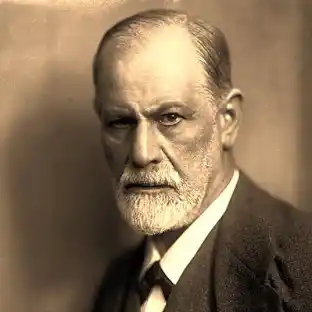
From Freud’s perspective
-
 Select options This product has multiple variants. The options may be chosen on the product page
 -
 Select options This product has multiple variants. The options may be chosen on the product page
 -
 Select options This product has multiple variants. The options may be chosen on the product page
05. What does Carl Jung say about dreams?
Carl Jung (1875–1961) – The Value of A Dream
According to Jung, the value of a dream lies in its ability to reveal aspects of the unconscious—both personal and collective. Dreams are not mere random images or meaningless stories; they are messengers of the psyche, offering symbols, archetypes, and patterns that connect inner life to broader human experience. By engaging with a dream—reflecting on its imagery, emotions, and motifs—we gain insight into inner conflicts, desires, and potentials that are otherwise hidden from the ego. Recurring dreams or emotionally charged narratives are opportunities to integrate unconscious material, fostering a Self-guided individuation process that leads to greater coherence between the conscious and unconscious minds, rather than simply being problems to be solved.
While Freud saw dreams as a peek into hidden desires, Carl Jung, the founder of analytical psychology, took dream analysis to a whole new level. Jung believed that dreams are messages from the unconscious mind, but not just personal—they often tap into what he called the collective unconscious, a shared reservoir of symbols and archetypes that connect all of humanity.
Relevant Publications or Studies on Dreams
- Psychological Aspects of the Persona (1933)
- Man and His Symbols (1964)
- Dream analyses since ~1900
Notes:
- Father of analytical psychology. Father of archetypes
- Introduced archetypes and the collective unconscious; expanded Freud’s vision; explored dreams as a path to personal growth
- Jung was a dissident disciple of Freud before developing his own ideas
His phrase, “There is no coming to consciousness without pain,” captures exactly the process that dreams invite us into. Jung believed that dreams are direct messages from the unconscious, bringing hidden aspects of the psyche—desires, fears, and shadow traits—to our attention, aspects we usually ignore, repress, or deny. Facing these truths about ourselves often involves discomfort, inner conflict, or even suffering. For example, a dream in which you are chased, fall, or lose something valuable may reflect unresolved fears, repressed emotions, or inner conflicts. Yet this pain is the price of psychological growth and a deeper, more authentic life, once the revealed content is acknowledged and integrated.
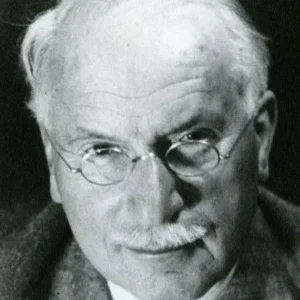
From Jung’s perspective
06. What does James Hillman say about dreams?
James Hillman (1926–2011) – The Value of a Dream
According to Hillman, the value of a dream does not lie in identifying causes, decoding symbols, or solving problems. Instead, it lies in engaging with the images, exploring their feelings, movements, and atmospheres, and listening to what the psyche is expressing. The dream is a living image, a reflection of the soul’s presence, and recurring dreams or intense imagery are invitations to deepen our relationship with our inner life, rather than problems to fix or threats to eliminate.
Hillman moved away from traditional clinical psychology to develop archetypal psychology, a more poetic and imaginal approach, publishing most of his work between the 1970s and 2000s. He was often described as the poet of the psyche, inviting us to dwell in the landscapes of our dreams. Hillman saw dreams not as problems to be solved or messages to be decoded, but as living images of the soul, demanding presence, imagination, and careful attention. According to him, dreams reveal the inner life of the psyche not through interpretation alone, but through experience, dialogue, and deep engagement with their imagery.
Relevant Publications or Studies on Dreams
- Re-Visioning Psychology (1975)
- The Dream and the Underworld (1979)
Notes:
- Father of archetypal psychology
- Dreams as living images of the soul; focus on poetic experience rather than functional interpretation
- Hillman was disciple of Jung (post-Jungian)
In Hillman’s perspective, dreams are not puzzles or instruments of analysis—they are encounters with the soul itself. A dream does not ask to be explained; it asks to be entered. Recurring dreams, vivid nightmares, or seemingly mundane images are not errors or warnings; they are persistent expressions of life inside us, reflecting conflicts, desires, or truths that cannot be grasped by logic alone. The night, in this view, becomes a theater of the imagination, where the psyche communicates in its own symbolic and emotional language, inviting reflection rather than solution.
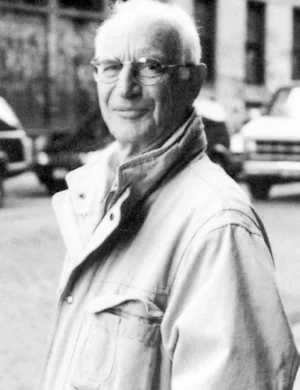
From Lacan’s perspective
07. What does Jung-Pauli say about dreams?
Jung–Pauli (1950s (main collaboration) – The Value of a Dream
From the perspective of the Jung–Pauli collaboration, dreams are not merely personal expressions or symbols to decode—they are manifestations of a deeper connection between psyche and matter, reflecting what they called the psychoid field. Dreams reveal patterns and events that arise at the boundary of consciousness and the underlying field of reality, suggesting that the psyche is interconnected with a broader, archetypal order. Engaging with dreams allows us to perceive synchronicities, meaningful coincidences, and archetypal structures that transcend the individual mind. Recurring or striking dream imagery is not just a personal signal, but a window into the field where inner life and external reality intertwine, offering insight into both personal transformation and the hidden harmonies of the universe, rather than problems to solve.
When science meets the psyche, you get the groundbreaking collaboration between Nobel laureate Wolfgang Pauli and psychologist Carl Jung. Together, they explored dreams as windows into hidden connections between mind, matter, and the cosmos. Jung had already proposed the existence of a psychoid level of reality—a domain that is neither purely psychic nor purely material, but foundational to both.
Jung introduced the concept of the psychoid field as a pre-psychic, pre-material ordering principle from which dreams, symbols, and synchronicities could emerge. Put differently, certain dreams, symbols, and synchronicities are not merely psychological but are also intertwined with a subtle, universal order.
The collaboration with physicist Pauli did not originate this idea but provided it with scientific support and conceptual reinforcement. Drawing on insights from quantum physics, Pauli helped articulate the psychoid more explicitly as a psychophysical field, bridging psyche and matter through a shared underlying order. Within this Jung–Pauli framework, certain dreams do not arise solely from the personal psyche. Instead, they emerge from this psychoid—or psychophysical—field, where individual consciousness intersects with a broader, transpersonal structure of reality.
Relevant Publications or Studies on Dreams
- Correspondence and records on synchronicity (1950s)
Notes:
- Father of Jung–Pauli Model (Psychoid / Field Theory)
- Interdisciplinary exploration of the psyche–matter relationship; synchronicity and psychic phenomena as reflections of physical reality; still linked to Jung’s archetypal psychology.
- Pauli was a former patient of Jung who became a key intellectual collaborator and dialogue partner
The Jung–Pauli model is cautious: it describes the psychoid, acausal fields, synchronicities, and patterns of the collective unconscious, but it avoids asserting any direct communication between minds, as there is no rigorous scientific or experimental basis for such a claim.
In other words, extraordinary experiences—such as dreaming romantically about a stranger and meeting them years later—are understood as parallel manifestations of the same underlying pattern (i.e., shared acausal patterns) from the collective unconscious or the psychoid field, rather than instances of one person sending information to another.
These patterns can appear across different individuals in ways that create the impression of communication or meaningful coincidence. The Jung–Pauli framework accommodates such phenomena without assuming telepathy, since everything emerges from a pre-psychic, acausal field that non-locally connects symbols, events, and psyche.
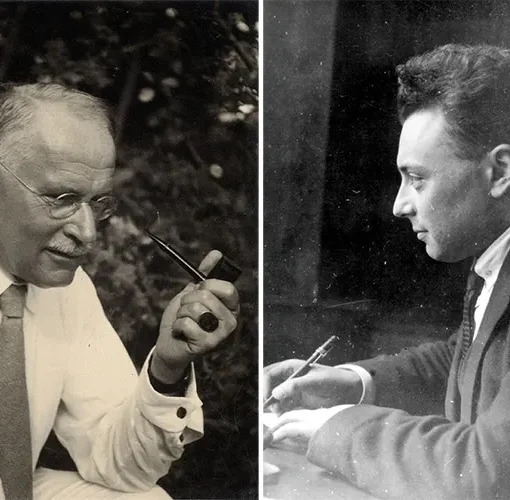
Jung’s view of Pauli analogy
Carl Jung, in turn deeply influenced by Einstein’s ideas about space and time, continues to …
A biological analogy would be the functional structure of a termite colony, possessing only unconscious performing organs, whereas the center, to which all the functions of the parts are related, is invisible and not empirically demonstrable. — Jung
Above, Jung considers the analogy proposed by Pauli between the atomic nucleus and the Self. Written in the autumn of 1935, this text supports the idea that many dreams contain elements that appear to originate from a unified field of transpersonal information.
![7 Senses [YOU] + Dreams<span style="color:#0078D7; vertical-align: super; font-size: 0.7em;">4-in-1</span> 🔥](https://www.viviancoach.com/wp-content/uploads/2026/01/7-Sense-Regulation-Dream-Analysis-300x300.webp)

08. What does Jacques Lacan say about dreams?
Jacques Lacan (1901–1981) – The Value of a Dream
According to Lacan, the value of a dream does not lie in its images or isolated narrative, but in how it is transformed into language and articulated through speech. The dream functions as a field of signifiers: its significance emerges not from visual content, but from how these signifiers enter discourse, narration, and the symbolic order. In being put into words, the dream does not offer a transparent window onto desire, but rather expresses unconscious desire in coded form—shaped by language, symbols, and psychic structures that only become legible through speech.
Lacan was initially a follower of Freud, not Jung. He was seen as a philosopher who mapped the hidden language of our dreams. In Lacan’s perspective, dreams are like puzzles written by your subconscious, pointing to conflicts, longings, and truths that often escape our conscious awareness. They aren’t just random stories—they’re clues to understanding your psyche, your relationships, and even the choices that shape your life, turning the night into a laboratory for personal growth and transformation.
Relevant Publications or Studies on Dreams
- Seminars on psychoanalysis, especially The Four Fundamental Concepts of Psychoanalysis (1964–65, published 1973)
Notes:
- Dreams seen as discourse, language, and signifiers; focus on the structure of the unconscious and the rules of language
- Lacan was a critical return to Freud
Jacques Lacan began teaching at the École Freudienne de Paris and publishing texts on psychoanalysis and dreams in the 1950s–1960s, but his central ideas about signifiers and dreams as language were consolidated in the 1960s. For example, the famous seminar was published in 1973, but the lectures took place in 1964–1965, and there dreams were already addressed in a structured way as discourse and language of the unconscious.
His phrase, “The unconscious is structured like a language,” means that the unconscious does not express itself through free images or universal symbols (as in Jung), but through signifiers: words, sounds, puns, displacements, and repetitions. Dreams, therefore, are not direct visual messages, but chains of language disguised as images. While Freud argues that the dream disguises a desire, Lacan goes further, saying that the dream speaks in its own language.
Lacan pays attention to how the dream speaks: wordplay, slips, substitutions, strange repetitions, breaks, and interruptions. He does not ask only, “What does this mean?” but rather, “How is this being said?” He understood dreams as the gaps between what we say, what we want, and what we truly experience.
For Lacan, the dream does not want to be translated into a final explanation; it wants to be listened to. Its meaning emerges in the dreamer’s speech, when the dream is narrated. The dream is an act of language of the unconscious, and Lacan teaches us how to listen to it. That is why, for Lacan, dreaming is speaking—but in a language the subject does not yet know they speak.
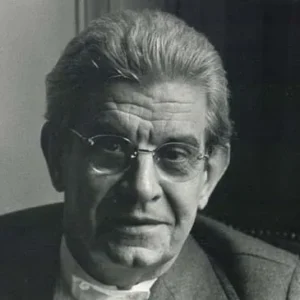
From Lacan’s perspective
09. Is dream analysis scientifically proven?
You might be wondering—can dreams really tell us anything, or is it all just wishful thinking? The answer is both fascinating and promising. While dream analysis isn’t a hard-and-fast science like physics, decades of research show that it’s far from random.
Dreams are today’s answers to tomorrow’s questions.—Edgar Cayce.
Studies at institutions like Princeton’s PEAR Lab and the Global Consciousness Project have explored how human consciousness interacts with information beyond our waking awareness. Meanwhile, clinics in Europe and around the world have successfully applied dream analysis in therapy, showing measurable benefits for emotional clarity, problem-solving, and personal growth.
While the full mechanics of dreams are still being explored, there’s no denying their power as a tool for self-discovery and guidance. Below is an expanded, historically layered timeline of theories of dreams, showing Freud, Jung, Hillman, Lacan, and the parallel currents that coexisted with them. The goal is to make clear plurality, overlap, and dialogue, not a single linear evolution.
⚡ Timeline of Theories of Dreams
🟤 Antiquity – 19th Century
(Pre-psychoanalytic foundations)
- Aristotle (4th c. BCE)
Dreams as natural phenomena arising from bodily
processes and sensory residues. - Medieval & Early Modern traditions
Dreams as divine messages, omens, or moral allegories. - Alfred Maury (1817–1892)
Dreams as physiological reactions to external and internal
stimuli. - Early neurology & medicine
Dreams linked to brain activity, fatigue, digestion, illness.
🔵 Late 19th – Early 20th Century
(Birth of psychoanalytic thought)
- Sigmund Freud (1856–1939)
The Interpretation of Dreams (1900):
Dreams as disguised wish fulfillment; unconscious desire,
repression, symbolism. - Pierre Janet (1859–1947)
Dreams related to dissociation, automatisms, trauma. - Havelock Ellis (1859–1939)
Dreams and sexuality without Freudian repression theory.
🟢 Early–Mid 20th Century
(Divergences within depth psychology)
- Carl Gustav Jung (1875–1961)
Dreams as symbolic communications from the unconscious;
archetypes, individuation, collective unconscious. - Alfred Adler (1870–1937)
Dreams as expressions of lifestyle, goals, and
compensations. - Otto Rank (1884–1939)
Birth trauma; creative will; dreams beyond Oedipal structure. - Wilhelm Stekel (1868–1940)
 Alternative symbolic interpretations.
🟣 1930s–1950s
(Symbolic, mythological, and
philosophical expansions)
- Gaston Bachelard (1884–1962)
Poetic and material imagination; reverie and dream images. - Mircea Eliade (1907–1986)
Dreams and symbols in myth, religion, and sacred
experience. - Erich Neumann (1905–1960)
Mythological–historical development of archetypes.
🔴 1950s–1970s (Language, structure & interdisciplinarity)
- Jacques Lacan (1901–1981)
Dreams as chains of signifiers; the unconscious structured
like a language; meaning emerges in speech. - Jung–Pauli Collaboration (1950s)
Dreams, synchronicity, psyche–matter relations; dialogue
between psychology and physics. - Melanie Klein (1882–1960)
Dreams and early unconscious fantasy. - Wilfred Bion (1897–1979)
Dreaming as a function of thinking; transformation of
emotional experience. - Donald Winnicott (1896–1971)
Transitional space, imagination, play.
🟠 1970s–1990s
(Post-Jungian and post-structural turns)
- James Hillman (1926–2011)
Founder of archetypal psychology; dreams as autonomous
imaginal worlds; “stay with the image.” - André Green (1927–2012)
The negative, absence, and the unrepresentable in dreams. - Phenomenology (Merleau-Ponty, others)
Dreams as lived experience, not symbols to decode.
⚫ Late 20th Century – Present
(Scientific & cultural plurality)
- Neuroscience
Hobson & McCarley:
Activation–synthesis theory; dreams as brain processes. - Cognitive psychology
Dreams as memory consolidation, simulation, problem-
solving. - Anthropology & cultural studies
Dreams as social, ritual, and cultural phenomena. - Contemporary integrative approaches
Dialogue between psychoanalysis, neuroscience, philosophy,
and cultural theory.
10. Can dreams tell you signs?
Ever wake up from a dream and feel like it was trying to tell you something? The truth is, dreams can be powerful signposts from your subconscious. Think of them as your mind’s own GPS system, guiding you toward the truth about yourself, solutions for recurring patterns, emerging life opportunities, or even warnings about what’s ahead.
A dream which is not interpreted is like a letter which is not read. — The Talmud.
❤️ My Invitation
Are you experiencing emotionally disturbing, recurring, or unusually vivid dreams?
Vivian Coach helps you uncover unconscious patterns—such as blocks, fears, loyalties, and inner conflicts—that may be shaping your waking life beyond conscious awareness. Explore our exclusive Dream Analysis Combo Packages, which go beyond traditional interpretation to offer therapeutic strategies for releasing limiting patterns and supporting deep inner transformation. New to dream work? Our standalone package, Your Dream Analysis™, is the perfect place to begin. 😄
By paying attention to symbols, scenarios, and emotions—the language of your dreams—you can turn sleep into a powerful tool for insight, guidance, and personal growth. This practice can help you unlock messages you might miss in the hustle of daily life and navigate life with greater confidence and awareness.
🚨 Important Note
All content published on this blog and across the website — including, but not limited to, texts, tables, graphics, and other materials — is original and the property of the author, except where expressly indicated otherwise, and is fully protected under applicable copyright law. Any reproduction, copying, distribution, or other use, in whole or in part, without the prior written permission of the author, is strictly prohibited and may result in legal action.
The content provided on this blog is for educational and informational purposes only and does not constitute, is not intended to constitute, and should not be interpreted as clinical diagnosis, prevention, treatment, cure, advice, guidance, or psychological, medical, or therapeutic care. Use of the information is at your own risk. For emotional, psychological, or health-related concerns, seek professional therapeutic or clinical support.
Related posts

Depression is the leading cause of disability worldwide, affecting over 264 million people